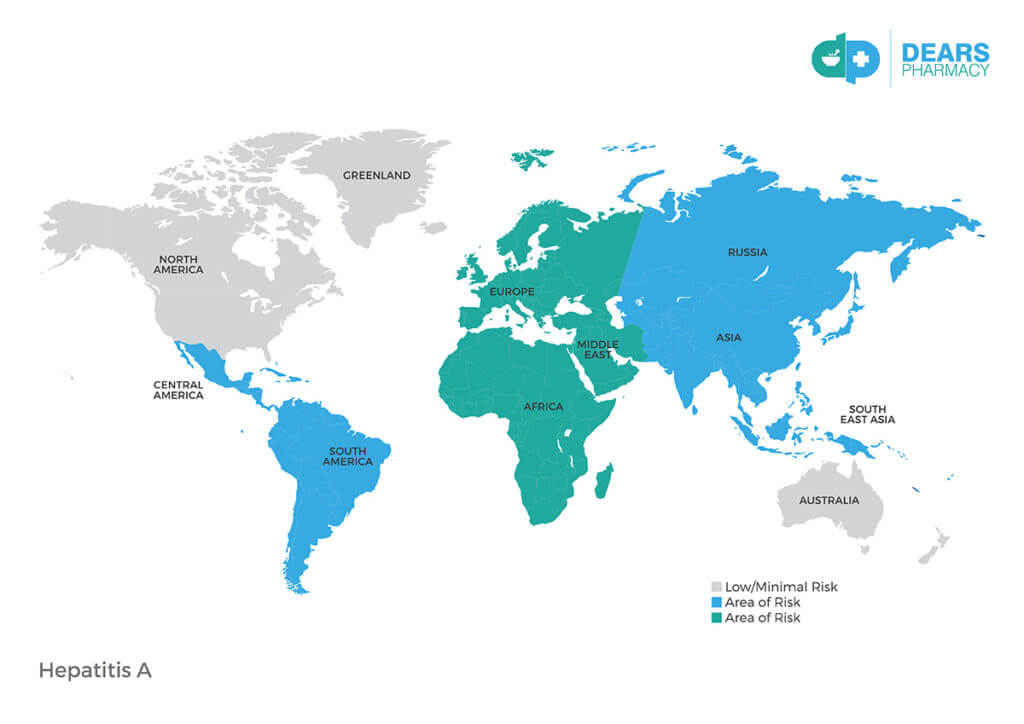
Hepatitis A is a viral infection that affects the liver. It is usually spread through food and water that have been contaminated with the faeces of an infected person, or through close person-to-person contact in places with poor hygiene. Unlike some other types of hepatitis, hepatitis A does not cause long-term (chronic) liver disease, but it can make you feel very unwell for several weeks and occasionally leads to severe illness.
Hepatitis A occurs worldwide, but the risk is higher in areas where sanitation and access to clean water are limited. These include much of Asia, Africa, Central and South America, the Middle East and parts of Eastern Europe. Travellers visiting friends and relatives, staying with local families or travelling for long periods are at particular risk in these regions.
Our recommended vaccines for the most common travel destinations outside of Western Europe often include Hepatitis A, Typhoid and Diphtheria, Tetanus and Polio (DTP). For some trips, especially to higher-risk regions or for longer stays, other vaccines such as Hepatitis B or cholera may also be advised. Good food and water hygiene is essential: drink safe or treated water, avoid raw or undercooked foods and be careful with ice, salads and street food. Travellers staying in basic accommodation, visiting rural areas or eating outside hotels regularly have an increased risk of hepatitis A infection.
The risk to short-term travellers staying in good quality accommodation is generally low, but it depends greatly on activities and how and where you eat and drink. Travellers who like to eat “off the beaten track”, stay with local families, volunteer in the community or work in healthcare or childcare are more likely to be exposed and should strongly consider vaccination.
People who develop hepatitis A often notice flu-like symptoms such as tiredness, aches and pains, loss of appetite, fever, feeling sick and discomfort in the upper right side of the abdomen. The liver can become inflamed, which may lead to yellowing of the skin and eyes (jaundice), dark urine and pale stools. Some people, especially young children, may have very mild symptoms or none at all, but can still pass the virus on to others.
The hepatitis A vaccination is usually given as a two-dose course. The first injection provides good short-term protection, and a booster dose 6–12 months later gives longer-term protection that can last many years. For convenience, hepatitis A can also be given as part of a combined vaccine (for example with typhoid or hepatitis B) where appropriate for your trip. Your travel health professional will advise on the most suitable schedule for your destination and timing.
Select your preferred pharmacy to visit their page and enquire about this service or just pop in when it suits you.

